I Made a Capsule Meal Plan Because I Was Tired of Deciding What to Eat


There are nights when I don’t mind cooking dinner at all. What I mind is figuring out what dinner is going to be. What should we have? Do I have everything? Did we already eat chicken twice this week? Is there something in the refrigerator that’s about to go bad? Do I need to run to the store? Somehow this entire conversation is happening in my head at 4:47 in the afternoon, usually when I’m already hungry and absolutely do not feel like conducting an inventory of the refrigerator.
I’ve realized that a lot of my frustration with feeding everyone isn’t actually cooking. I like cooking. I make sourdough, I’ll roast a chicken, I’m perfectly willing to make a pot of soup from scratch. It’s the constant deciding that wears me out. Lately I’ve been trying to simplify other parts of life too, mostly by paying attention to the things that create a ridiculous number of tiny decisions. Food seemed like a pretty obvious place to experiment.
That’s when I started thinking about capsule wardrobes. The point of a capsule wardrobe isn’t to wear the same white T-shirt every day for the rest of your life. It’s to have a smaller collection of things you already know work, so getting dressed doesn’t require quite so much thought. Why couldn’t meals work the same way?
I started thinking of it as a capsule meal plan: a simple way of meal planning built around a small group of breakfasts, lunches and dinner themes that can repeat while the actual ingredients and recipes change.
The Capsule Meal Idea
Instead of sitting down every week and choosing 21 different meals, I’m giving certain meals a home base. Breakfast doesn’t need to surprise me, lunch doesn’t need its own Pinterest board, and Tuesday night certainly doesn’t need a brainstorming session.
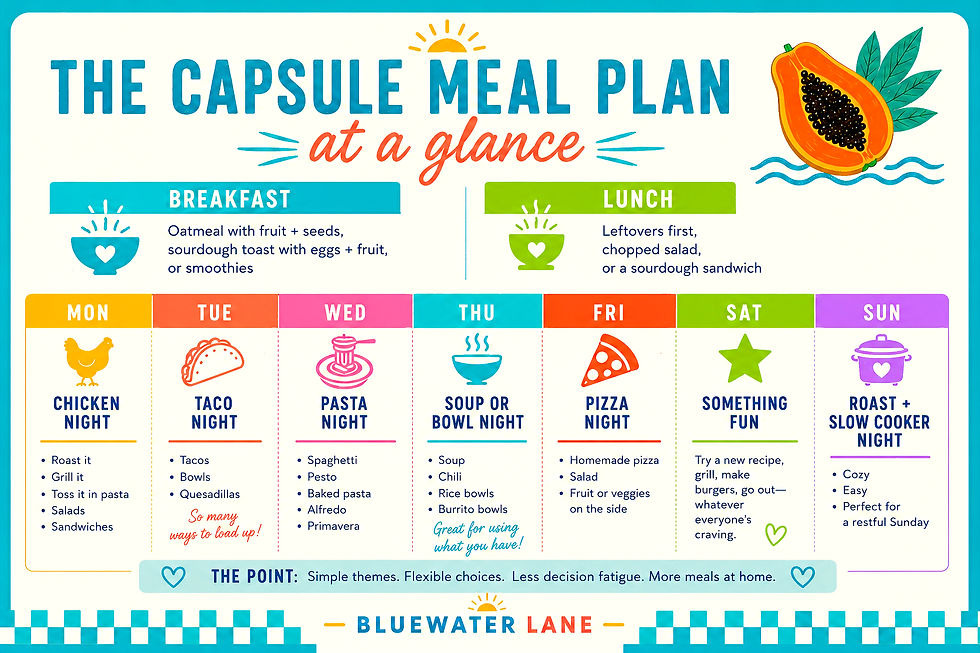
For breakfast, I really only need a few things I genuinely enjoy. Oatmeal with fruit and seeds is one. Sourdough toast with eggs and fruit is another. Smoothies are an easy third option, especially because I can throw in whatever fruit I have along with spinach, chia, flax or hemp seeds. The details can change depending on what we have. I can use different berries in the oatmeal, add spinach or scallions to the eggs, or change what goes into a smoothie. I’m not eating an identical breakfast every morning, but I’m also not waking up and asking myself what sort of breakfast person I’d like to be today.
Lunch can be even easier. Leftovers get first dibs. If we have chicken from Monday, taco filling from Tuesday or pasta from Wednesday, that’s lunch before I’ve had to think about making anything else. If there aren’t leftovers, I can fall back on a couple of defaults: a big chopped salad with chicken, beans and whatever vegetables are around, or a sandwich on homemade sourdough with fruit and something crunchy on the side. Lunch doesn’t really need a scheduled menu. It just needs a few easy directions I already know work.
Dinner gets a little more freedom, but even there I’m narrowing the field. I don’t necessarily need to know exactly what I’m making every night weeks in advance. I just need somewhere to start.
My Capsule Dinner Week
The easiest way for me to picture this is to give each night of the week a loose dinner theme. Not a rule and not necessarily the same recipe every Monday forever, just enough direction that I’m starting with a much smaller question than What in the world should I make for dinner?
Monday: Chicken Night
This could be roasted chicken with potatoes and vegetables, chicken Parmesan, grilled chicken with a big salad, chicken Alfredo or even something as simple as chicken sandwiches. The theme stays the same, but there are plenty of directions it can go.
Tuesday: Taco Night
Probably the easiest night to keep interesting. Ground beef, chicken, black beans or even leftover roasted vegetables can become tacos, bowls or quesadillas. This is also an easy place to pile on plants with cabbage, lettuce, tomatoes, onions, cilantro, corn, beans, avocado, salsa and lime.
Wednesday: Pasta Night
Spaghetti, baked pasta, pesto, Alfredo, pasta primavera or whatever new pasta recipe I’ve been wanting to try. Pasta also gives me an easy place to use vegetables that are already in the refrigerator instead of planning an entirely separate meal for them.
Thursday: Soup or Bowl Night
A pot of soup, chili, a rice bowl or burrito bowls can absorb a surprising amount of produce, beans, leftover protein and odds and ends from earlier in the week. It naturally becomes a bit of a use-what-we-have night without feeling like one.
Friday: Pizza Night
Homemade pizza feels like Friday without automatically becoming another takeout night. The toppings can change with whatever is around, and a salad, fruit or some vegetables on the side rounds it out.
Saturday: Something Fun
This is where I want the capsule to loosen up. Try a new recipe, grill something, make burgers, go out, recreate a restaurant meal or make whatever everyone is craving. Having one open night keeps the whole idea from feeling overly scheduled.
Sunday: Roast + Slow Cooker Night
Sunday is the day I want dinner to feel a little more like Sunday dinner without spending half the day making it. A pot roast in the slow cooker, pork tenderloin with roasted vegetables, slow-cooked carnitas or an easy sheet-pan dinner can mostly take care of itself while I enjoy the day. It still feels warm and substantial when everyone sits down to eat, but it doesn’t turn a restful Sunday into hours of cooking and dishes.
None of these are rules. If we want tacos on Wednesday, civilization will survive. The themes are simply there to make deciding easier. If Tuesday is taco night, I’ve already narrowed hundreds of possible dinners down to one much easier question: What kind of tacos sound good this week?
And that distinction is really the whole thing: I’m reducing decision variety, not food variety.

And Somehow, This Works With Eating More Plants
I’ve also been experimenting with eating 30+ different plants a week, and initially these two ideas seemed like they should work against each other. If I’m trying to eat more variety, wouldn’t I need more recipes, more ingredients and a much more complicated grocery list?
Not really. I was thinking about variety in the wrong place.
My oatmeal can stay “the oatmeal” while what goes into it changes. Oats, banana, strawberries, blueberries, chia and flax already put quite a few different plants into one extremely ordinary breakfast. Another week I can use raspberries or peaches, sprinkle in hemp seeds or add something else that looked good at the store. My smoothie works the same way. The basic meal stays familiar while the plants inside it rotate.
The same thing happens with lunch and dinner. The chopped salad is still the chopped salad whether this week it has cucumber, tomatoes and peppers or cabbage, corn, chickpeas and scallions. Tacos can pick up lettuce, tomatoes, onions, cilantro, corn, black beans, salsa, avocado and lime without becoming an elaborate “healthy recipe.” Pasta can get spinach one week and broccoli or zucchini the next. Soup is practically designed for throwing in whatever needs to be eaten.
The meals can repeat. The plants can rotate.
That might be my favorite part of this whole experiment. Eating a greater variety of plants doesn’t necessarily require finding dozens of new recipes. Sometimes it’s much easier to build variety into food you already know how to make.
My Simple Weekly Grocery List
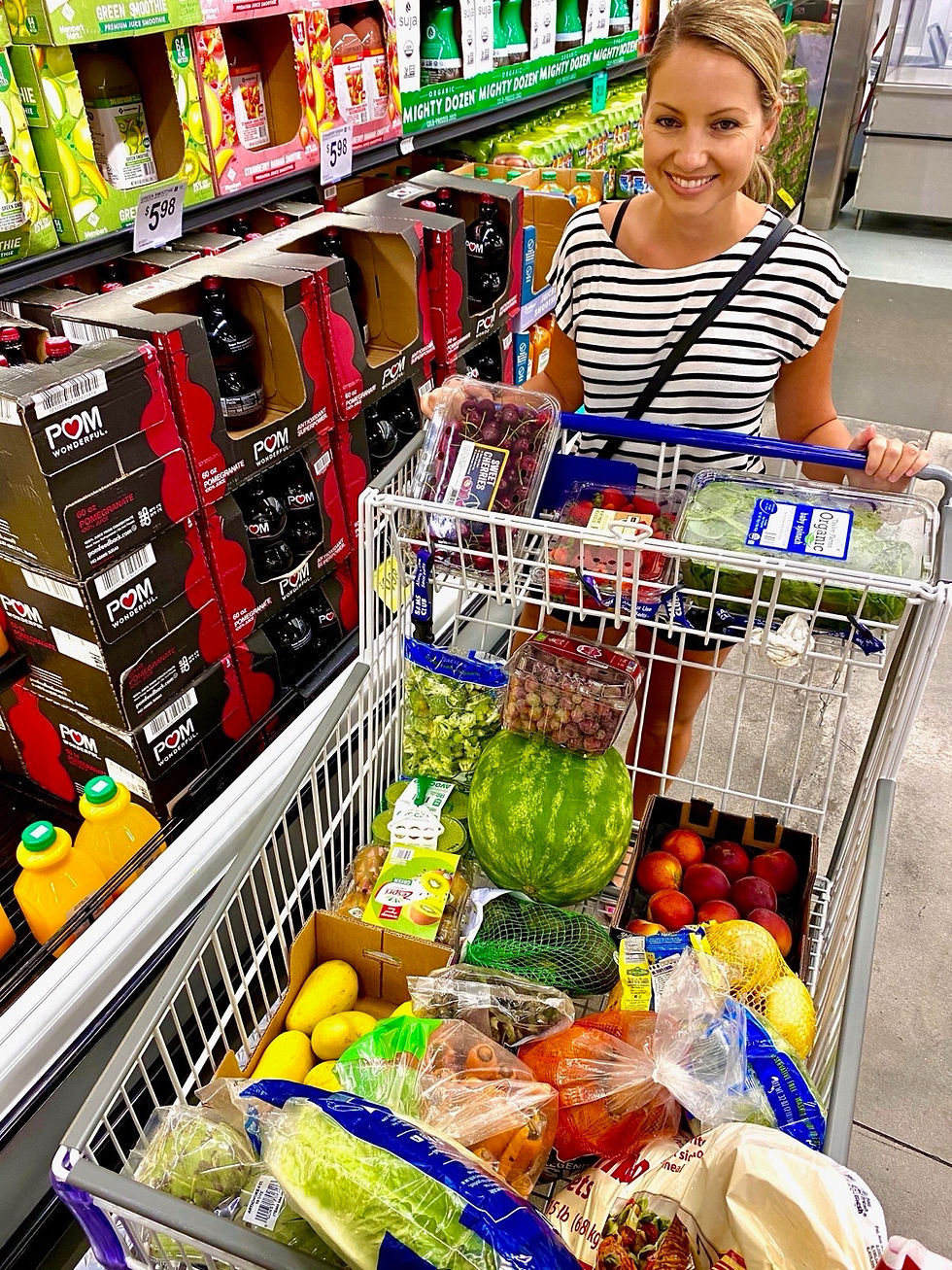
The grocery-store part may end up being just as useful as the meal plan. Instead of building a brand-new shopping list around seven unrelated recipes every week, most of the cart can stay familiar. Then I can leave a little room for whatever is seasonal, on sale or simply looks good.
Produce
Bananas
Apples
Berries
Lemons and limes
Spinach or another green
Tomatoes
Cucumbers
Onions
Scallions
Bell peppers
Broccoli
Carrots
Potatoes
Avocado
Fresh herbs
Then I’ll add a handful of rotating plants each week: peaches in summer, cabbage for tacos, an artichoke, zucchini, corn, pineapple, raspberries or a green I haven’t bought lately. This is where I can keep adding variety without rebuilding the entire menu around it.
Protein
Chicken
Eggs
Greek yogurt or cottage cheese
Ground beef or turkey
Black beans
Pinto beans
Chickpeas
Another protein for one or two dinners
I especially like adding beans to this list because they fit both sides of what I’m trying to do. They’re an easy source of protein and fiber, but they also add another plant to the week. Black beans can go into tacos or bowls, chickpeas can go onto salads, and other beans can disappear into soups without requiring me to plan an entirely separate “bean meal.”
The Basics
Oats
Sourdough bread
Rice
Potatoes
Tortillas
Pasta
Chia seeds
Flax seeds
Things That Make Simple Food Good
Garlic
Salsa
Fresh herbs
Cheese
A few favorite dressings or ingredients to make them
Seasonings I actually use
That’s basically the cart. It’s not a grocery haul built around seven unrelated recipes that each require three special ingredients I’ll use once and then rediscover six months later. Most of these foods can move around. Spinach can go into eggs, smoothies, pasta or a salad. Beans can become tacos, bowls or lunch. Chicken can be dinner one night and part of a salad the next day. The ingredients earn their place because they work in more than one meal.
Can a Capsule Meal Plan Save Money?
There’s a nice practical side effect to all of this: I’m buying groceries with a purpose without needing every ingredient to belong to one specific recipe.
The same spinach can end up in a smoothie, eggs, pasta and a salad. Chicken can become dinner one night and lunch the next. Beans can move between tacos, bowls, salads and soup. Fruit gets eaten at breakfast or grabbed during the day. I’m buying foods we actually use and giving myself several opportunities to use them.
It also makes the grocery cart more predictable. Most weeks I can start with the same basic list, add whatever produce looks good, fill in what we’re out of and choose a few things for that week’s dinners. And if I already know there are several easy meals waiting at home, there’s less chance of reaching 5:00, realizing I have absolutely no plan and deciding we should just go get something.
So the win isn’t really about turning grocery shopping into a budgeting project. It’s simpler than that: buy food we actually eat, use more of what we buy and make eating at home easier.
What I’m Really Trying to Get Rid Of
I’m not trying to create the world’s most optimized meal plan, and I definitely don’t want another complicated system to maintain. I’m trying to eliminate that daily moment when everyone needs to eat and I’m standing in front of the refrigerator thinking, What are we going to have?
If I know we almost always have chicken, beans, sourdough, eggs, oats, tortillas, pasta, fruit and a refrigerator full of vegetables, there are very few nights when there is actually nothing to eat. The combination might change, the produce might change and the recipe might change, but the starting point is already there.
I’ve been married for 20 years, so feeding a family isn’t exactly a new assignment for me. I’ve made a lot of dinners. Some have been great, some have been completely forgettable and some have ended with us deciding to go out anyway. What I’m realizing now is that I don’t need to make the whole thing harder in order for it to matter.
I do believe caring for my family is part of the work God has given me, and I want to honor Him in how I do it. For me, that doesn’t mean making an impressive dinner every night. It means trying to be thoughtful with what we have, feeding the people I love, wasting less, planning ahead when I can and making home life run a little better.
That’s why this capsule idea appeals to me. It takes some of the noise out of the process. I can keep food in the house, know where dinner is headed and stop spending so much energy reinventing the week every Monday.
There will still be new recipes, restaurants, spontaneous grocery-store finds and nights when the plan gets completely ignored because pizza sounds better. I don’t want a capsule meal plan to turn eating into a set of rules. I want it to make the practical part easier so there’s more room for the people around the table.
Maybe simplifying meals doesn’t mean eating fewer kinds of food at all. Maybe it just means making fewer decisions about them.

Comments